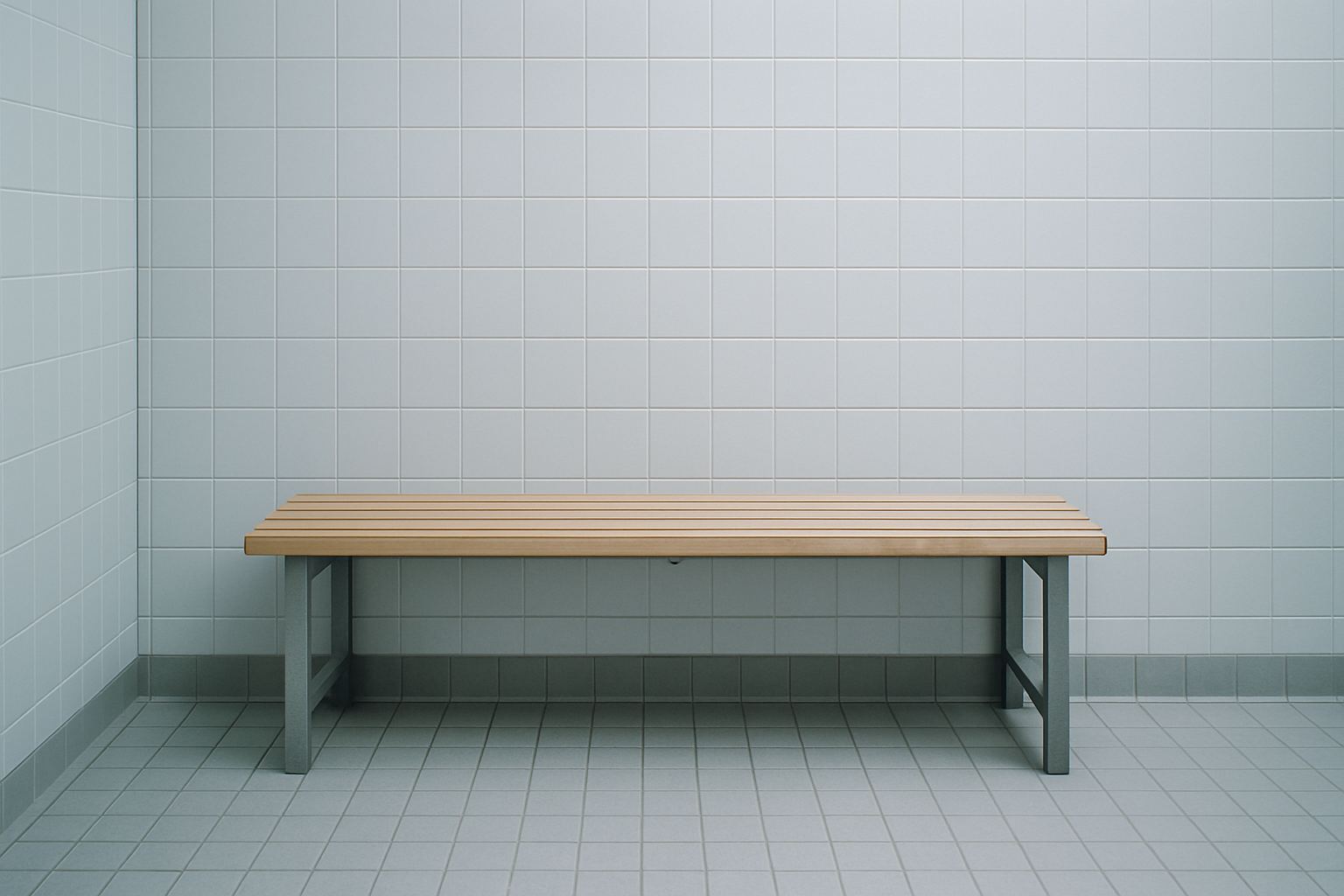
The changing room is the part of a swimming facility that gets the least attention and produces the most complaints. It is also the part where a session leader's job is hardest and where a family's experience of a pool is largely determined.
What a changing room is, physically
Warm, humid, wet, hard surfaced, shared by a large number of people through a day, with a high turnover and periods of intense use. Add bare feet, shared benches, and a floor that never fully dries.
That combination produces three distinct kinds of issue, and it is worth separating them because they belong to different people.
| Problem | What it looks like | Who owns it |
|---|---|---|
| Slips | Standing water, worn surfaces, running children, spilled toiletries | Operator, with session leaders managing behaviour |
| Cleaning and maintenance | Cleaning frequency, drainage, ventilation, working showers and lockers | Operator, entirely |
| Personal hygiene practice | Footwear, drying properly, not sharing towels | The swimmer |
Slips are the underrated hazard
The most likely thing to go wrong for a swimmer in a changing room is not an infection. It is a slip. Wet hard floors, bare feet, children moving fast, adults carrying bags, and a room designed for throughput. Slip risk in pool surrounds and changing areas is addressed in Health and Safety Executive, HSG179 Health and safety in swimming pools and it is an operator responsibility covering surface specification, drainage, cleaning regime and maintenance.
For a session leader, this is where a large share of the manageable risk in a session sits, and it is why the risk assessment should follow the group through the changing rooms rather than starting at the poolside.
Changing rooms are the most difficult place to supervise a group: multiple spaces, safeguarding constraints on which adults can be where, other members of the public present, and a group that can split without anybody noticing. It is where children get separated. Planning for it specifically, including a stated arrangement for who is where and how the group is counted, is worth more than almost anything else in a session plan.
What a swimmer actually holds
A short list, described as ordinary practice rather than as protection against anything specific, because claims about what prevents what are clinical claims and we do not make them.
- Footwear. Flip flops or pool shoes in the changing room and shower area. This is the common practice and it also addresses the slip and the sharp objects question.
- Dry properly. Especially between the toes and anywhere that stays damp.
- Do not share towels. Straightforward.
- Take your kit home and dry it. Swimwear and towels left damp in a bag are unpleasant by the next session.
- Use the shower properly before swimming, which is the chemistry point covered in why pools ask you to shower first.
- Report anything broken or unclean, because the operator cannot fix what nobody tells them about.
Athlete's foot, verrucas, rashes, nail changes and anything else affecting skin are clinical matters. Speak to a pharmacist, who can help with a great deal of this directly, or to a GP. We do not diagnose, we do not name treatments and we do not tell you what you have picked up or where. The NHS has information pages on common conditions and they are the right place, not a swimming publication.
What the operator owns, which is most of it
- Cleaning regime and its frequency, including during the operating day rather than only at the start and end.
- Drainage and floor specification, which determine whether water stands.
- Ventilation, which determines whether anything ever dries.
- Working showers, at a usable temperature, which is the single biggest determinant of whether pre swim showering actually happens.
- Lockers, benches and fittings that work and are not broken.
- Layout, including whether groups can be supervised and whether the route to poolside passes the showers.
- Turnaround time in the timetable, which determines whether anybody has time to do any of the above.
Notice that the last one is a programming decision rather than a facilities one, and it is the one that most often makes everything else impossible.
Does the changing environment differ?
Indoors it is the standard changing village or corridor: warm, humid, shared with the public, and frequently the hardest part of a session to supervise.
Ventilation matters here as much as in the hall, because it determines whether the space ever dries between sessions.
Outdoor venues vary enormously, from full changing blocks to a field. Many open water sites have nothing at all, which moves everything to the swimmer: bringing a towel, a change of clothes and somewhere to change.
For groups, the absence of facilities at an open water site is a planning fact rather than a complaint, and it particularly affects getting warm afterwards.
Whether the changing facilities work
Owns footwear, drying, not sharing towels, taking kit home, and reporting what is broken or unclean. Owns using the shower properly. Owns nothing about the state of the room.
Owns supervising the group through the space, which is the hardest supervision environment in the session. Owns the arrangement for who is where, the head counts, the safeguarding position, and raising with the operator when the turnaround makes the routine impossible.
Owns the room: cleaning, drainage, floor surfaces, ventilation, shower temperature and number, lockers, layout and the timetable that determines whether anybody has time. Slip risk in pool surrounds and changing areas is an operator duty.
Where a duty attachesHealth and Safety Executive, HSG179 Health and safety in swimming pools for pool surrounds, changing areas and slip risk, with the code of practice from Pool Water Treatment Advisory Group. Duties under the Health and Safety at Work etc. Act 1974 and the Management of Health and Safety at Work Regulations 1999. Clinical questions to a pharmacist or the NHS.
Family changing, cubicles and what the layout decides
Changing facility design has moved substantially over the past few decades, from separate large communal rooms towards village style layouts with individual and family cubicles around a shared central area. That change was driven partly by safeguarding and partly by families wanting to change together, and it has been a clear improvement for most users.
It also changes the supervision problem rather than removing it. A village layout means more spaces, a group distributed across them, and less ability for one adult to see everybody at once. It is easier for a family and harder for a leader with twenty children, which is a trade off worth naming rather than pretending away.
The practical consequences for a session leader: know the layout before the session rather than discovering it, decide where the group gathers before and after, and count in the shared area rather than assuming that everybody who went into a cubicle has come out of one.
What is worth reporting, and how
Operators generally want to know and generally cannot see everything. What is worth telling them, and what makes the telling effective:
- Standing water that is not draining, with the location.
- A shower that runs cold, which directly affects whether anybody showers before swimming.
- Broken lockers, benches, hooks or cubicle doors.
- Anything that has been unclean on more than one visit, which is the word that matters, because a pattern is information and a single observation is not.
- Anything sharp, broken or damaged on a floor or wall.
In writing, if it recurs. A written report creates a record, and a record is what turns a series of individual grumbles into something an operator can act on and can justify spending on.
Summary
Wear something on your feet, dry properly, do not share towels, take your kit home, and tell the operator when something is broken. Everything else in that room belongs to the operator, including the cleaning, the drainage, the ventilation, the shower temperature and the timetable that decides whether anybody has time to do anything. And if you are running a group, plan the changing room specifically, because it is where children get separated and where most of the slips happen.